
A Winter Dairy Visit
There are no seasonal and weather restrictions in the dairy industry. Cows must be milked and the work must be done- rain, heat, or snow.
Recently, FARMWISE Value Chain Professional Becky Landes visited a farm in her region, and we asked her to share her experience below.
Field Notes: Becky Landes
On a cool mid-winter morning I drove to an Amish dairy in Northern Indiana. We had experienced a mid-winter thaw, therefore my drive of 1 hour and 20-minute was through a misty landscape. There is not a direct route to my destination, but I didn't mind. It allowed me the opportunity to observe the still sleeping fields not yet ready to plant. Cows and horses dotted the landscape resting or eating their breakfast along my route. It was a good time to anticipate my upcoming farm visit and enjoy a beautiful morning.
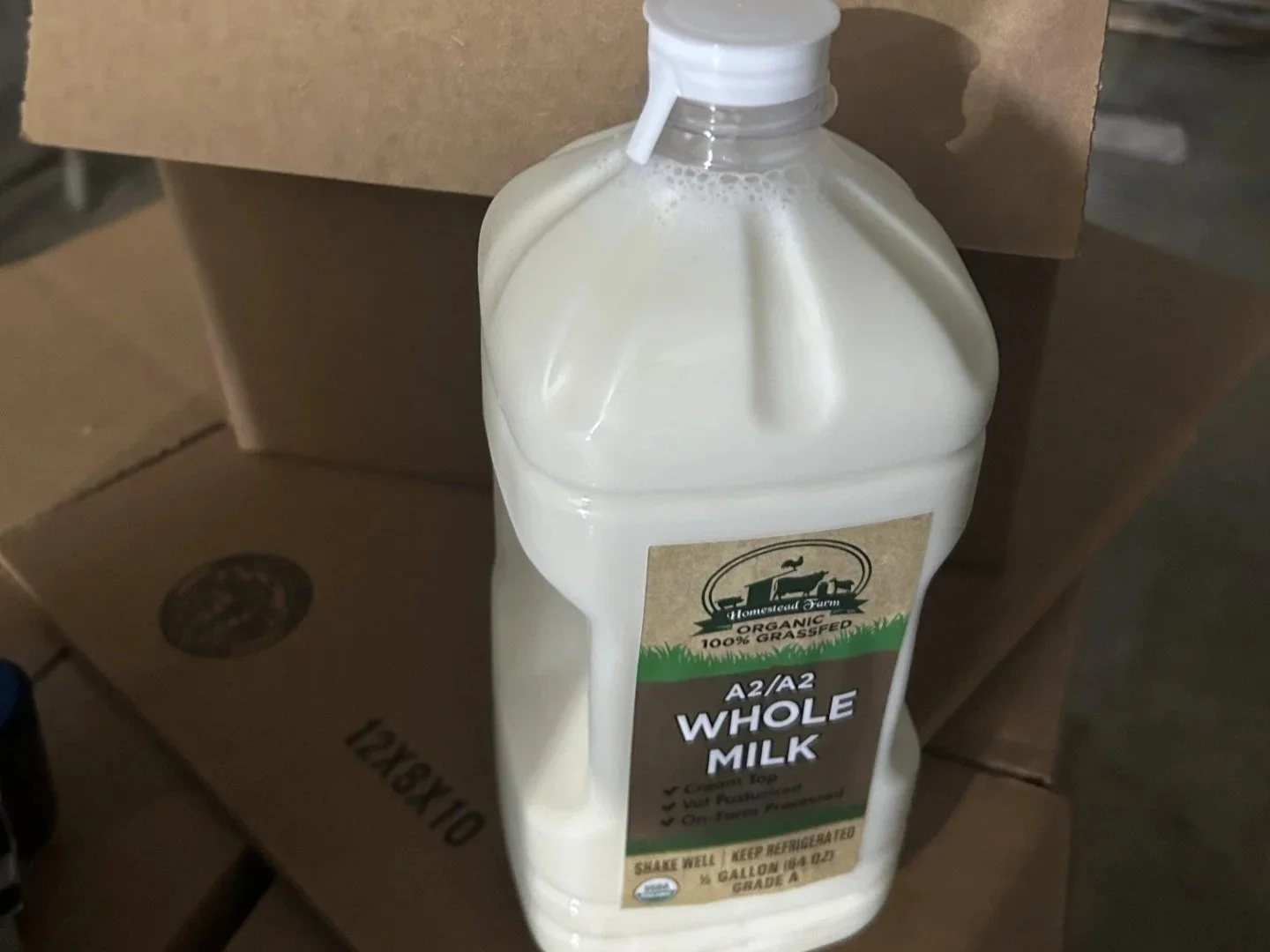
When I arrived at the Amish dairy farm in the back country of LaGrange County, I was greeted by a smiling dairyman. We went into the milk processing room where they make butter and bottle cream-top milk. If you are not familiar with cream-top milk, it is milk that has been pasteurized but not homogenized. When the milk sits in your refrigerator the cream rises to the top and the bottle must be shaken before each use.
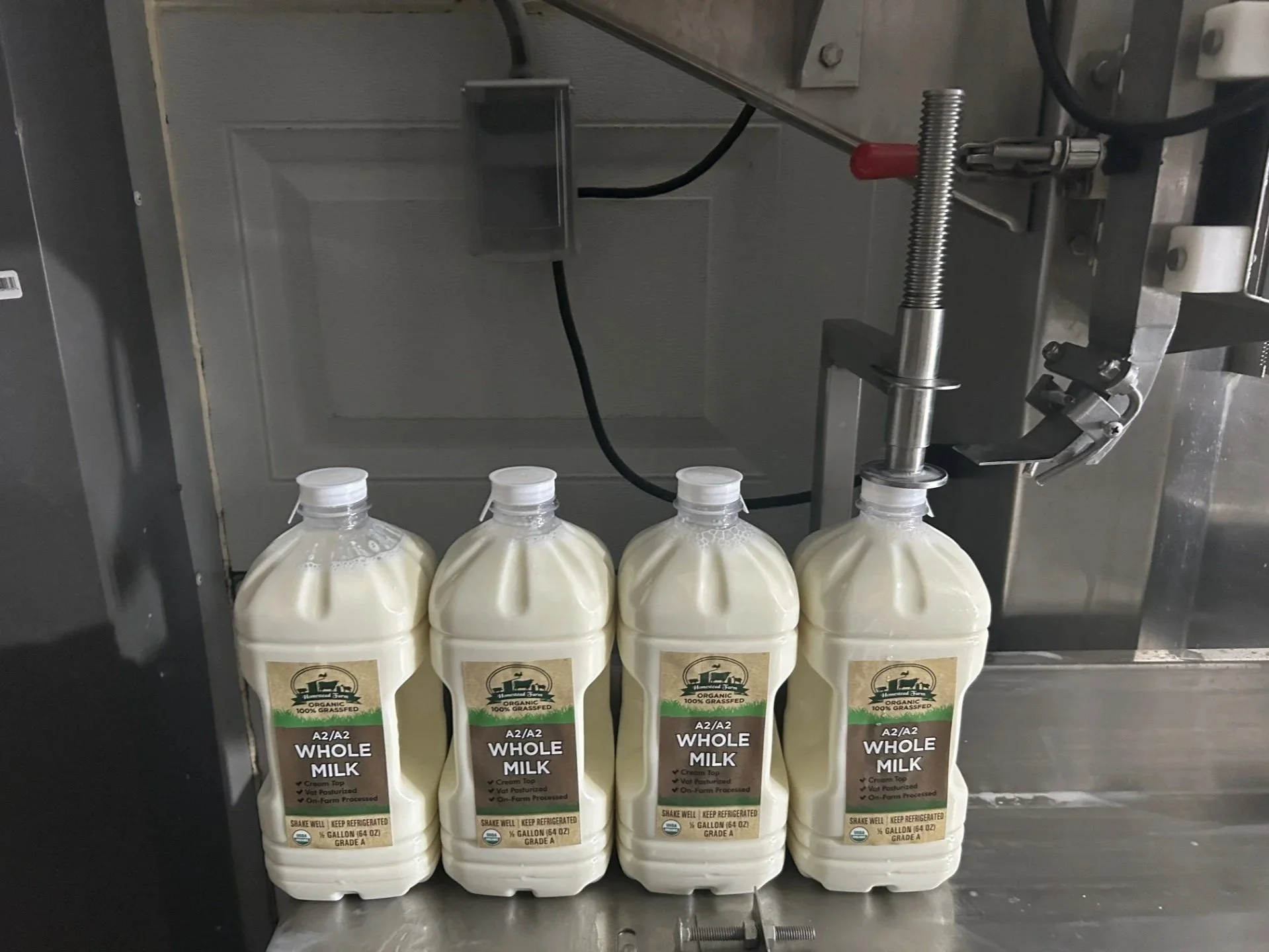
The dairyman introduced me to his oldest daughter who was bottling the milk in 1-gallon jugs. The milk bottling machine is not automated, so every time they filled the bottle with milk and put the tamper-proof cap on, they had to step on a foot-pedal. Soon, the dairyman changed places with his daughter so that she could complete other tasks. While he filled bottles with milk and capped them, I packed the cold, sealed milk bottles into cardboard cartons and taped them shut ready for delivery. While we worked, we talked about his operation, his vision for his dairy business, A2A2 milk, and how they also make butter from the milk of their cows.
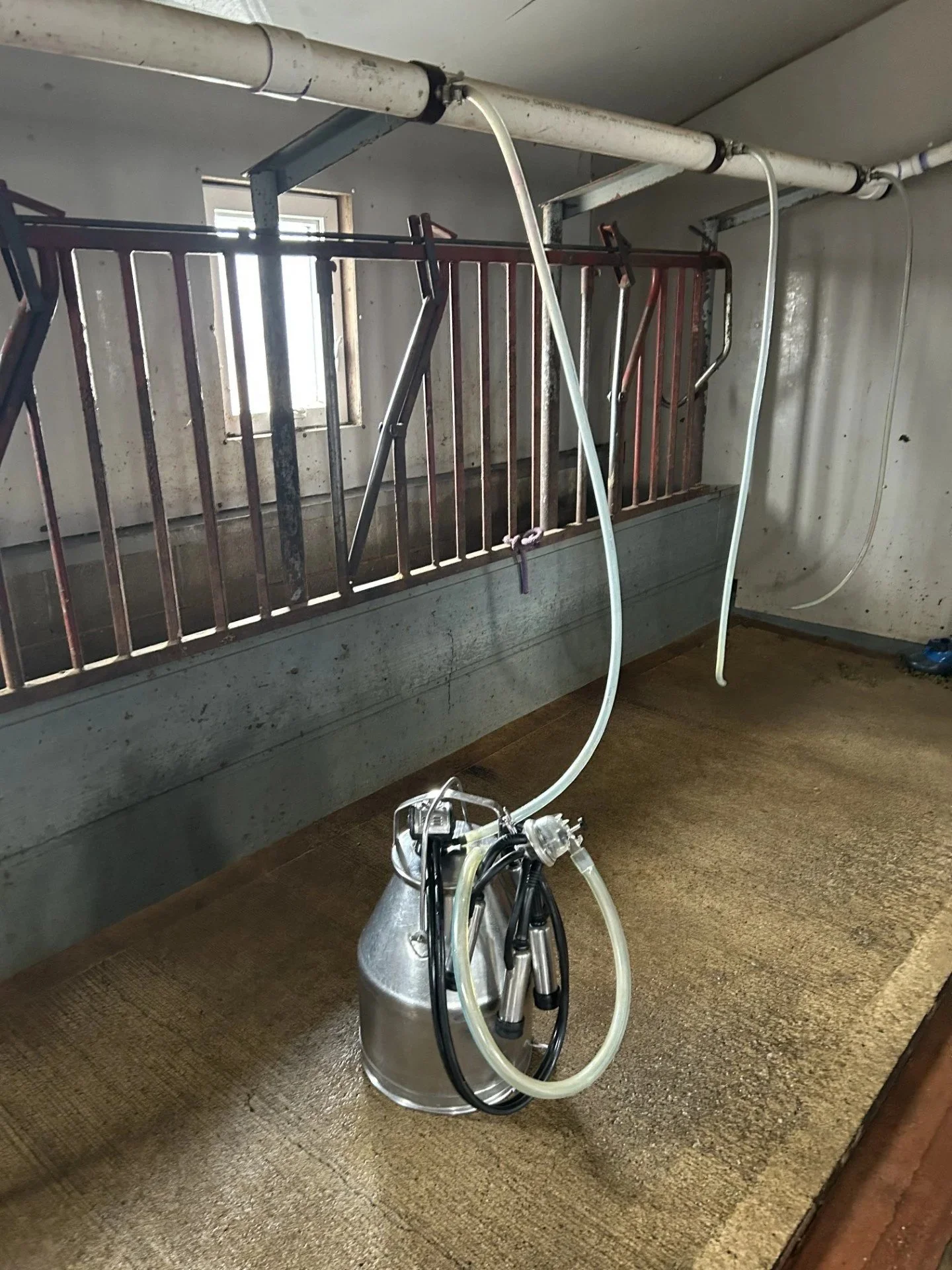
After the milk bottling was done, I was shown the milk parlor where they milk 60 head of cows, 8 at a time. the dairyman answered my questions on how they milked their cows without electricity (by a vacuum system), how the milk made its way to the bulk tank without a piping system (each milk can is carried and emptied by hand.
The drive back home through the countryside seemed very short. I had learned so much that I had many things to reflect and consider while I drove.
Farm visits, building relationships, and exploring Northeast Indiana one farm at a time is why I love what I do.
Contributed by FARMWISE Indiana Value Chain Professional Becky Landes
