
Food Hubs, Aggregators, and Distributors: Indiana's Local Food Supply Chain Mapped
Understanding who sits in the middle of Indiana's local food supply chain is one of the most important and most overlooked steps in building a food system that actually works for farmers and buyers alike.
Who Supports the Middle of the Supply Chain in Indiana?
Middle of supply chain businesses can wear many hats. They can provide numerous functions that help process and coordinate the movements of food from farm to plate. These maps are focused on the Indiana-based businesses or nearby support businesses that keep food moving from Hoosier farmers to wholesale buyers. FARMWISE Indiana is committed to providing resources and information on wholesale market channels and the following maps, definitions, and information serve to provide a common language and set of resources for focused efforts on regional food market channels. It is a resource for businesses to find one another or for buyers and agencies to learn more about the entities where local food moves through in order to be purchased. If you click on a point on the map, more information will appear about that business.
Please note: this map is a work in progress. If you have comments or questions, please reach out to hello@farmwiseindiana.org. Please share with those in your networks who will benefit from this information.
What Makes up the Supply Chain?
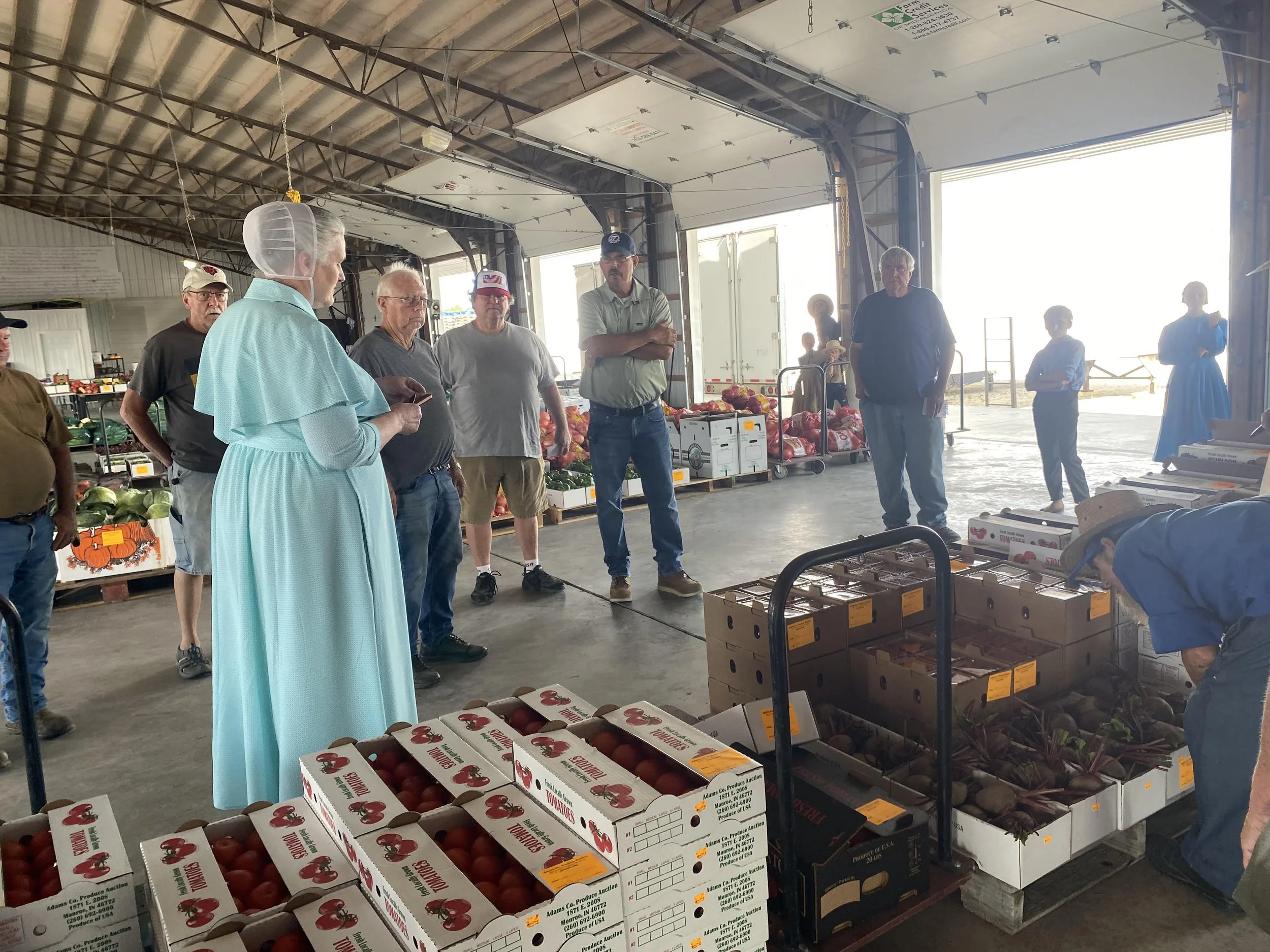
One example is a seasonal produce auction where Indiana farmers can sell their foods to Indiana buyers of all kind each week.
AGGREGATORS
Aggregators are organizations, businesses, or cooperatives that assemble food from multiple local businesses and provide services such as storage, transportation, sales platforms, retail environments, marketing, invoicing/payment, business and regulatory support. There are many models for aggregation and most are designed to fit the needs of suppliers like farmers and food businesses so that they can better connect to buyers both the home consumer and wholesale buyer (chefs, food service directors, retailers).
Aggregators share values with the businesses they serve and find that they can help increase farm food production and sales for farmers and access to locally grown foods for buyers. Aggregators coordinate across a food supply chain from farmers to buyers and provide the logistic services to move food from farm to buyer.
Food Hubs are a local food and farm oriented business with a management structure and dedicated staff who facilitate the aggregation, sales, crop planning, marketing, and logistics between suppliers and buyers. Some food hubs also offer processing, packaging, storage, hub-to-hub sales, shared-kitchen facilities, product liability insurance, or co-branding for their suppliers. Foods are sourced from farmers, food artisans, and entrepreneurs.
Food Hubs are responsible for consistent sales, vetting and representing their suppliers, ensuring regulatory compliance and traceability, and communicating with buyers in a way that is representative of the shared values. Food Hubs coordinate with many suppliers and many buyers and therefore must be able to communicate and have set policies for how they do business.
Farm hubs aggregate and provide services to other farmers in a region. These services generally include aggregation, transportation, and sales. Farm Hubs can also offer other services such as storage, repacking, marketing, invoicing/payment, and shared-kitchen facilities. Farm hubs work with direct to consumer and wholesale buyers and coordinate how the food moves from the farm hub to the buyer. Generally farm hubs are offering a service to other farmers and are taking on these tasks in addition to their farm work.
Farm Stores are retail environments where home consumers can shop during open hours and seasons. They are oriented toward agritourism and sell food as well as other crafts and foods from local and non-local sources. There are great maps for people to access these stores so we did not map them here. See Indiana Grown and Indiana Tourism websites.
Farm Stops are year-round, every-day retail markets that stock food from local growers and crafts from artisans. They operate on a consignment model and are LLCs, cooperatives, or nonprofits. Farmers sell alongside one another like a farmers market, but in a retail setting that is more familiar to home food shoppers. Food producers set prices and product mix. Farm stops thrive in communities that have a robust farmers market. They enable farmers and consumers to connect consistently and are less vulnerable to weekly/seasonal market schedules, weather, timing, and community support.
Auctions support local, wholesale farmers by aggregating and selling products during an event time and location. There are seven auctions that sell produce in Indiana, located near Plain Community settlements to serve those farmers who grow a lot of food, but are limited in their methods for transportation and sales. Auctions are available for any buyer who attends, registers, and is ready to purchase and transport their buy that day. These bulk buying events are seasonal but critical for farmers and wholesale buyers throughout Indiana.
Distributors purchase food from global, national, and local suppliers. They aggregate, sell, and transport food to retail and food service wholesale buyers and maintain and manage warehouses, trucks, and storage spaces for food distribution. Broadline distributors sell everything from paper towels and trash liners to produce and meats. Specialty distributors focus on produce, meats, and other products. Locally sourced foods generally move through specialty and small distributors as shown on the map.
Retail stores purchase food from farmers and food businesses (as well as distributors and larger suppliers) and offer them for sale at a location to the home consumer. Locally owned and specialty grocers tend to stock foods from regional farmers and food artisans. On this map, we are showing online and brick and mortar retail grocery stores that are open year-round and offer the full spectrum of foods, with some of them being locally sourced.
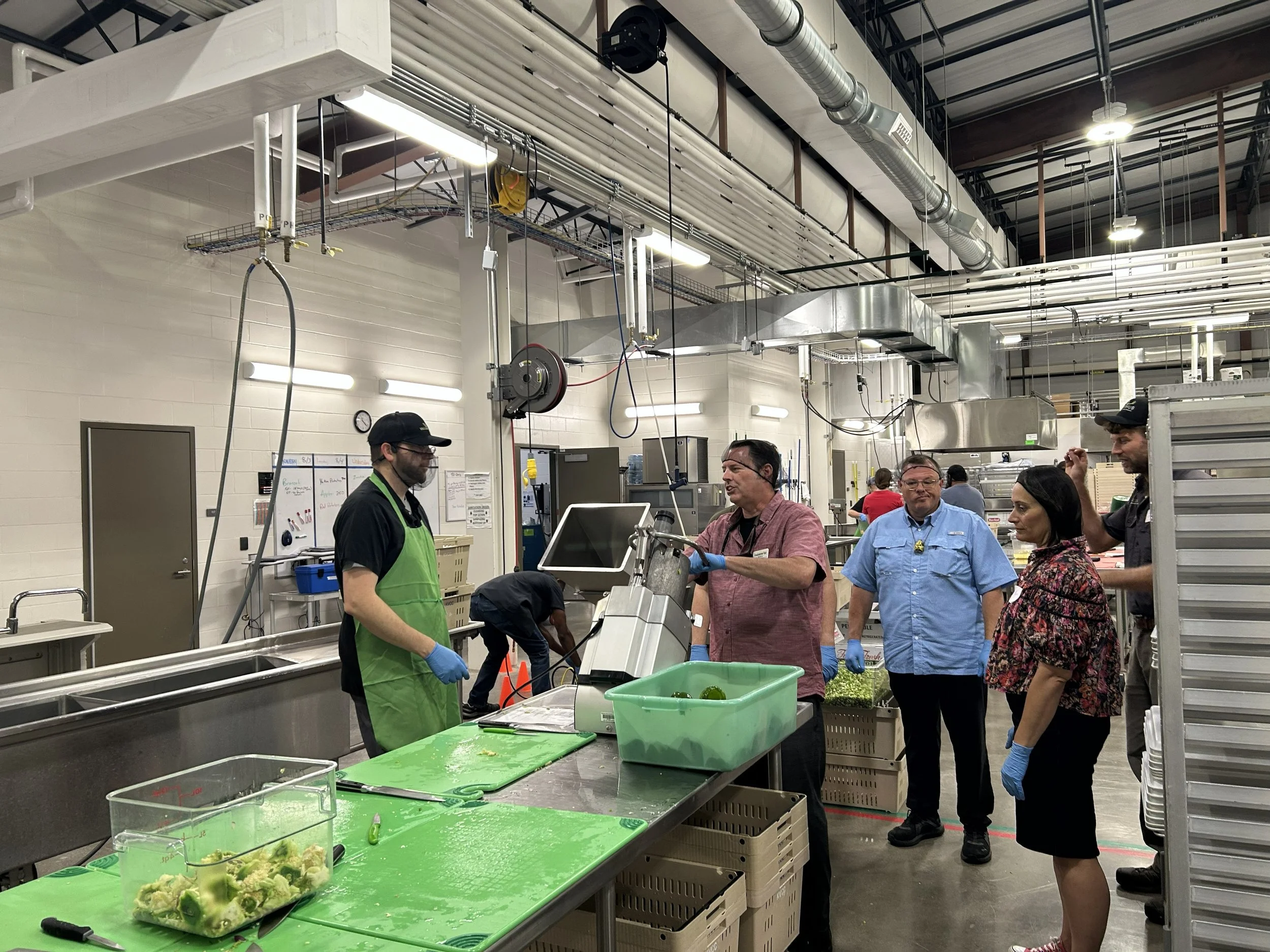
This is an example of a very small-scale food processor located in Kalamazoo, Michigan.
PROCESSORS
Foods are regulated for safety and some foods must be processed before they are ready for sales. Foods such as meat, dairy, grains, fish, and poultry must be processed and packaged in a licensed facility that is inspected for wholesale sales. Produce is often purchased raw and on-farm safety audits may or may not be necessary for a farm. Eggs producers must be licensed. Some foods are processed in a licensed, commercial kitchen in order to provide a 'value-added' product (i.e turning strawberries into jam or tomatoes into BBQ sauce).
The businesses on the following maps are available to local and regional farmers and food entrepreneurs looking to add value to their products in a regulated setting. They are the businesses that support regional wholesale market channels and do not include non-food or private facilities that are not accessible to local farmers.
Processors transform food from raw product into something that has minimal or further processing. Processors work with foods including meat (beef, pork, lamb, goat), poultry (chicken, turkey, duck), dairy (fluid milk and dairy products) as well as fruits and vegetables.
Meat and Poultry Processing Animal slaughter and processing are regulated by the Indiana Board of Animal Health. Animal proteins for wholesale market channels must be processed in a state or federally licensed and inspected facility. Listed on the map are the facilities that are available to local farmers where they can have animals processed for bulk sales.
Co-packers provide commercial food processing services for food businesses and private labels. Common processes include cold packing, hot packing, bottling, vacuum packing, dehydration, baking, and further meat processing. Farmers and food entrepreneurs can work with a co-packer to scale up from home-based vending or shared-use kitchens. A co-packer will use your recipe, and, with your direction, source products from you or other farmers. Once the product is finished, they will either handle shipping or provide a time for you to pick it up. Generally, you are responsible for selling the product.
Mills and grain processors transform raw field products into usable grains and flours. Grains include cereals, pseudo cereals, beans, and pulses. Processing includes cleaning, hulling, steaming, milling, and packaging for wholesale or consumer sales. Some mills buy grain that they sell, other mills will charge milling fees and return the product to the farmer for sales. Food-grade milling can prepare grains to be used for baking, brewing, distilling, and cooking.
For more information about food grains in the Midwest, see the information from the Artisan Grain Collaborative.
Food processing and food rescue operations lessen food waste and increase food distribution to those in need. Food is sourced from farmers, grocers, distributors, caterers, restaurants, universities, and schools and processed into hot meals and pantry goods. Organizations may also help with field gleaning to help farmers harvest unused field food that can be picked by volunteers and moved to food banks. These are middle of supply chain operations and serve the purpose of addressing food access - either through raw farm product donations or preparing rescued food into hot and takeaway meals for food insecure groups.
For more information about gleaning and donation from farms in Indiana see the Society of St Andrew and Hatch. For more information about food rescue see Second Helpings and Cultivate South Bend. Schools can be a great resource for food sharing and donation. You can learn more about K-12 School Food Rescue and get signed up to participate.
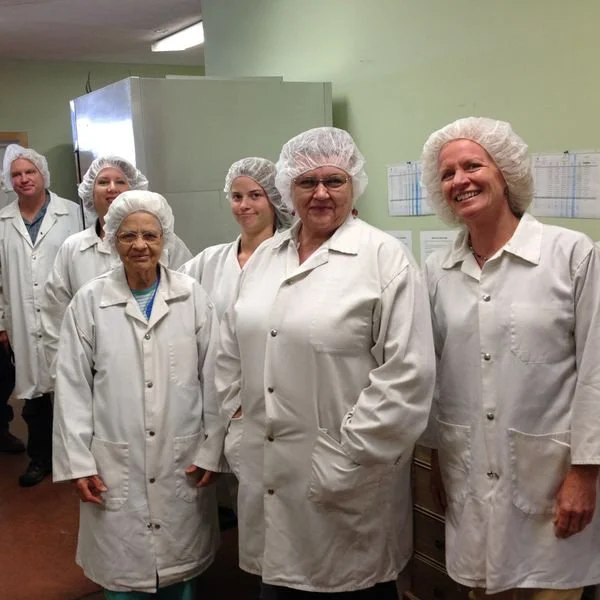
These are not inspectors- because they are not permitted to be photographed. But this is what they would look like in most facilities- dressed in white.
REGULATORS
Food safety is governed by laws and regulations, and managed by local, state, and federal agencies. Inspectors visit farms, kitchens, aggregators, warehouses, processors, and other spaces where food is grown, transported, stored, processed, prepared, and sold. Everyone in wholesale food production and markets is part of food safety regulations and compliance.
Laboratories are authorized to conduct analysis of food products to provide information on food safety (water activity, pH, acidity, etc) or contents (nutrition label, food allergens, etc). Generally, farmers and food businesses send samples to a lab for testing to demonstrate to inspectors that their processes and products are safe and compliant with laws.
Inspectors from the County, State, and Federal level of government ensure our food supply stays safe. In Indiana we have a Food Code that is interpreted by each County Health Department. The County inspects commercial kitchens, food businesses, food trucks, shared-kitchens, farmers market vendors, pop-up markets, and events, and may require permits and special inspections or documentation for local food processing. Each County also has a Weights and Measures office that inspects scales used to weigh food (farmers market, grocers, etc). State and Federal meat and poultry Inspectors work at state and federally inspected processing facilities to inspect live animals before slaughter and to grade meat. Auditors such as USDA GAPs or other third-party auditors may be required to inspect your businesses according to the needs of your buyer and/or the regulatory framework in which you operate.
The Kitchen, shared kitchen in Logansport
FARM AND FOOD BUSINESS SUPPORT
Entities that support the development of farm and food businesses are critical for food systems. Events like farmers markets and places such as shared-use kitchens can incubate and cultivate an entrepreneurial ecosystem for a community. These spaces build capacity for entrepreneurs and they support home grown job creation and increase quality of place. Agencies that support farm and food business development understand there is a special need to understand farmers and food businesses and entrepreneurs. Markets that help move product from farm to buyer are also critical for supporting local farmers and food artisans who feed our communities.
Farmer's markets enable beginner, young, and experienced farmers to convene on a calendar basis and connect directly to consumers. Farmers are able to build a brand and business, receive feedback, and test different products for home consumers. Farmer's markets are critical for incubating new farm and food businesses in every community. Proper management and support for farmers markets is essential for creating an entrepreneurial ecosystem. There are great resources for Farmers Markets on the National Farmers Market Coalition website and the Indiana Community of Practice.
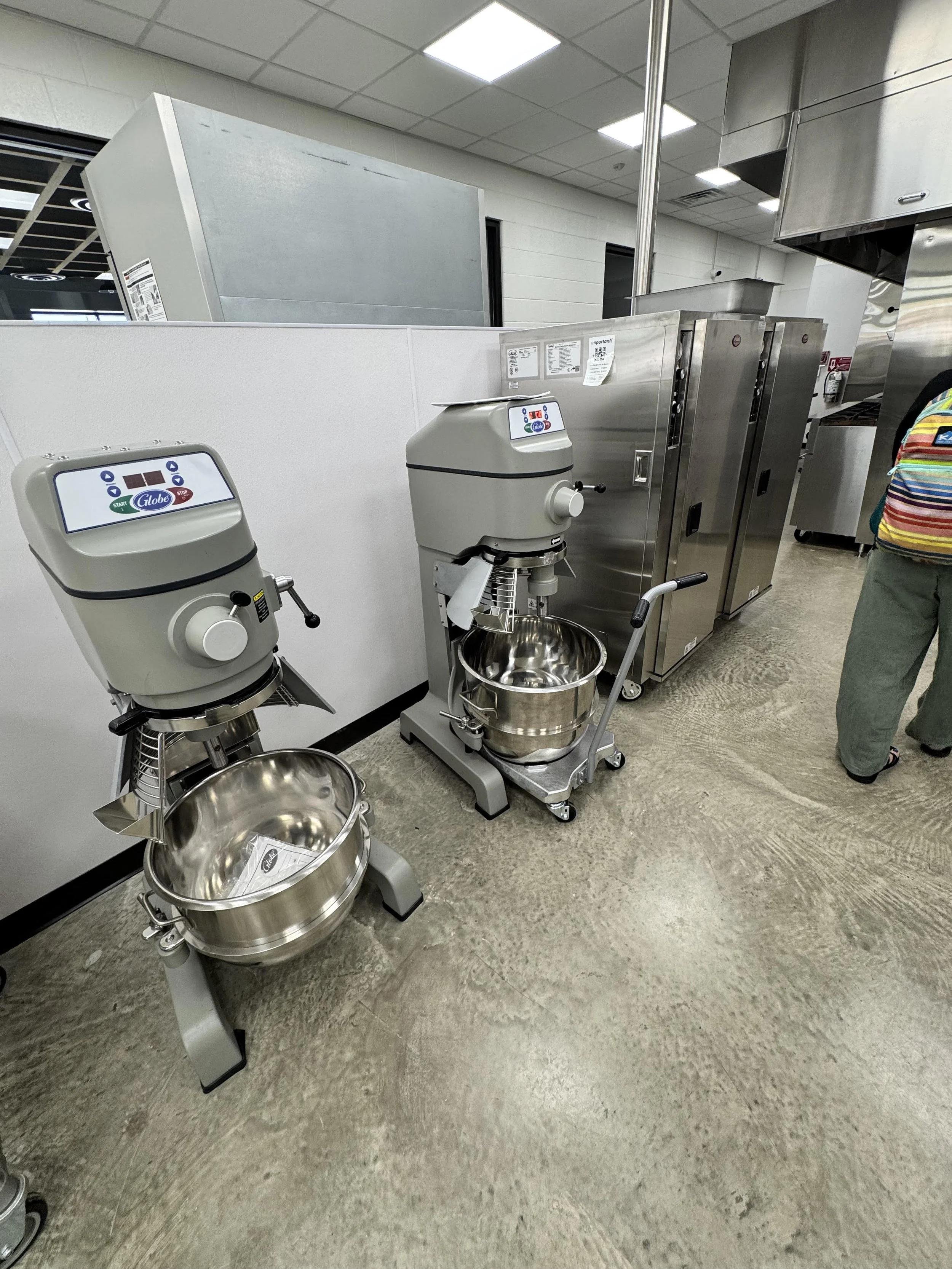
Shared-use kitchens are commercial kitchens that are available (rentals) to food entrepreneurs so they can process and add value to their foods. Kitchens are managed and inspected by county or state officials. Food businesses are also inspected and approved for retail sales. Many food trucks, packaged food companies, meal prep businesses, caterers, and chefs use these shared kitchens to build a business, work on a new enterprise, or create shelf stable foods for sale in retail stores. These shared kitchens help incubate businesses and business ideas for entrepreneurs who may come from a home-based vending background and who may progress into a co-packing contract. Often, the shared kitchen managers provide business and market channel development services, as well as commercial kitchen and food safety practice training. More information on shared kitchens can be found on The Food Corridor and Kitchen EDU website.
Value Chain Professionals spend 100% of their time building relationships with and between farmers, food businesses, middle of supply chain businesses, and support organizations. They can lead and take on roles that help with market matchmaking and accountability and work with partners who might provide technical assistance, funding, and advocacy support for regional food systems. Farmers and food businesses can reach out directly to be connected with someone who will support wholesale market channel development for Indiana foods. Please reach out to hello@farmwiseindiana.org to be connected to a VCP near you.
The Indiana Food Business Consultants and the Indiana Small Business Development Center offer a wealth of experience and support for farmers and food businesses who are working to scale and develop enterprises for their businesses. From business planning to market exploration, this group can individually help with your questions and needs. Reach out!
