
June with the FARMWISE Indiana Team
Each month we ask our Team to share a few highlights of their regional food system work from their perspective. It’s hard to capture all of the meetings, Connections, farm visits, and meaningful conversations into one blog post, but a few highlights from June are below!
FARMWISE connects wholesale ready buyers with wholesale opportunities. See examples of how we build relationships, below.
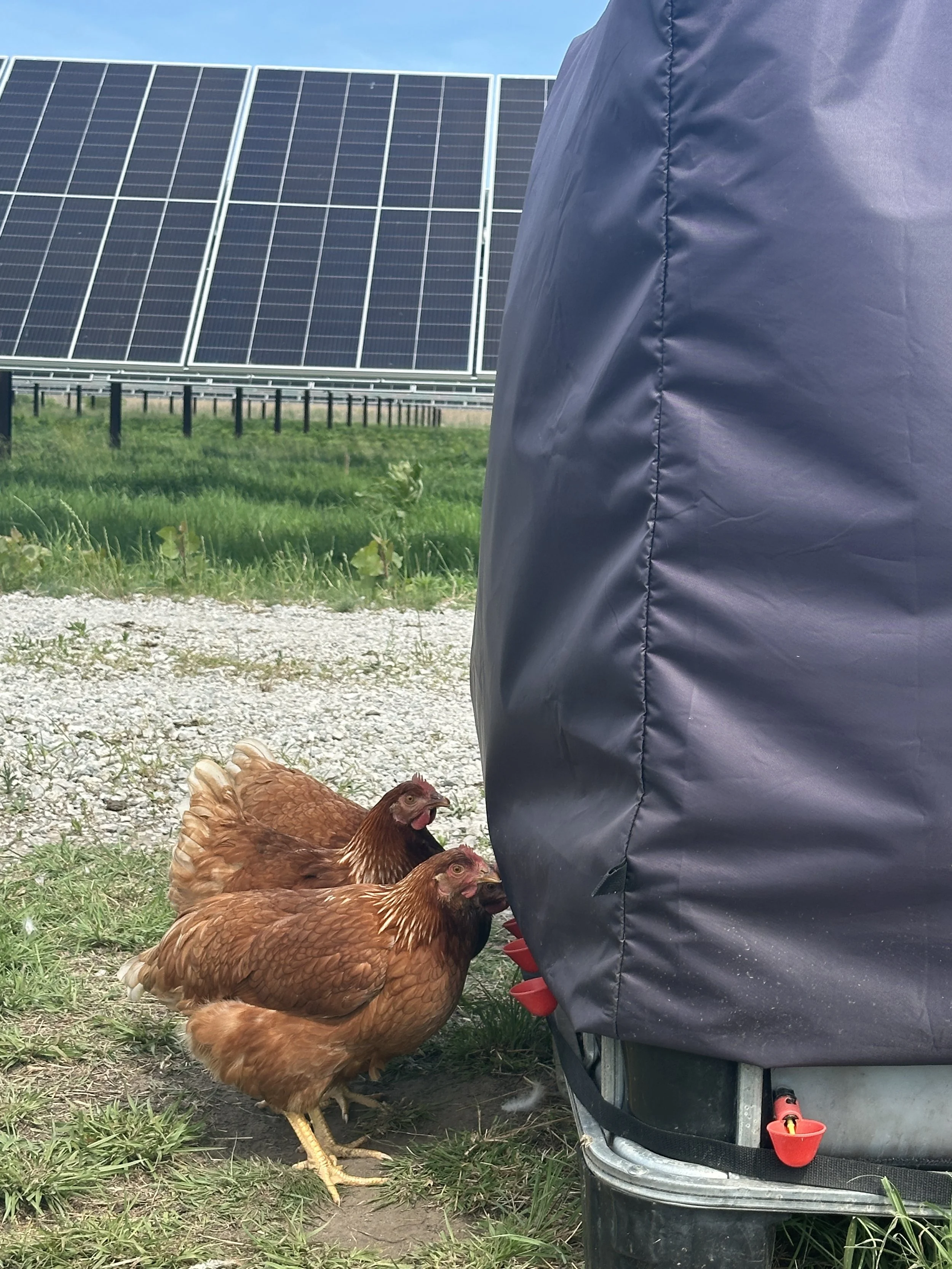
Chickens at Mammoth Solar
Robin Kitowski, Director of Producer Relations and Market Access
Agrivoltaics: the dual use of the same land for both agricultural production (such as crops, livestock, or pollinator habitat) and solar energy generation through ground-mounted photovoltaic panels.
Members of the FARMWISE team visited two facilities modeling agrivoltaics in the state this month. In early June, fellow team member Jen Musall and I visited The Mammoth Solar Project which spans 13,000 acres across Starke and Pulaski Counties. When build out is complete, it is expected to generate over 1.3–2.2 gigawatts of electricity. On Mammoth’s research and demonstration agrivoltaics pilot area, an area of roughly 230 acres, a farmer is innovating with mixed species intensive grazing with 100 ewes, Kunekune hogs, chickens, geese, bees, and guardian dogs as the block's contracted farmer. He plans to evaluate conventional and specialty cropping opportunities in areas both inside and outside the perimeter fences. Aside from the benefits of vegetation management and soil improvement, one of the end goals of this joint agrivoltaics effort is to produce a replicable model that can be scaled across thousands of acres of array.
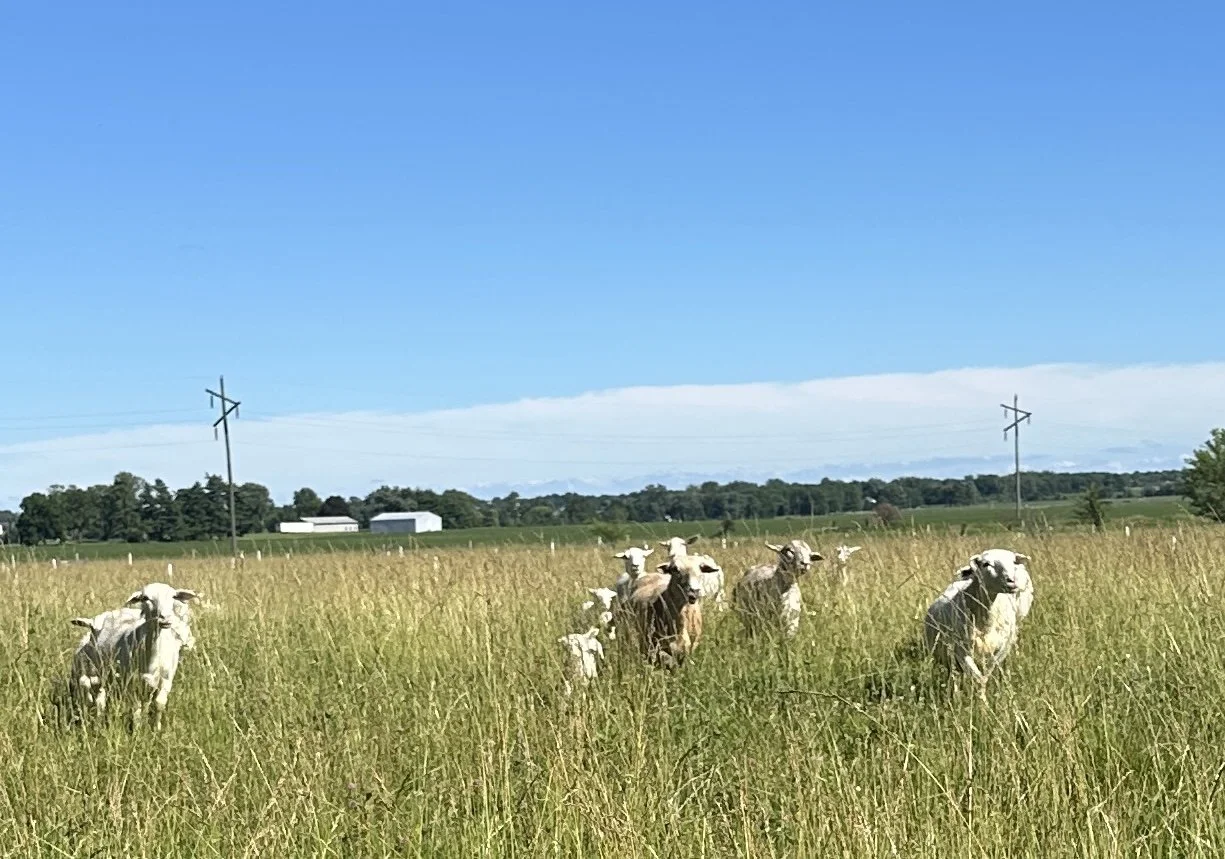
Sunovis Ranch
Later in the month Executive Director, Jodee Smith accompanied me on a visit to Sunovis Ranch in Johnson County. Paul and Dana Cummings and their three teens are refining a model of solar grazing with their flock of Katahdin sheep. Paul, also a solar developer, sees Sunovis at the nexus of developers, grazers, and farmers/landowners, fostering the relationships that bridge the gaps among these three groups to create solutions that keep agriculture actively connected to acreage under solar lease.
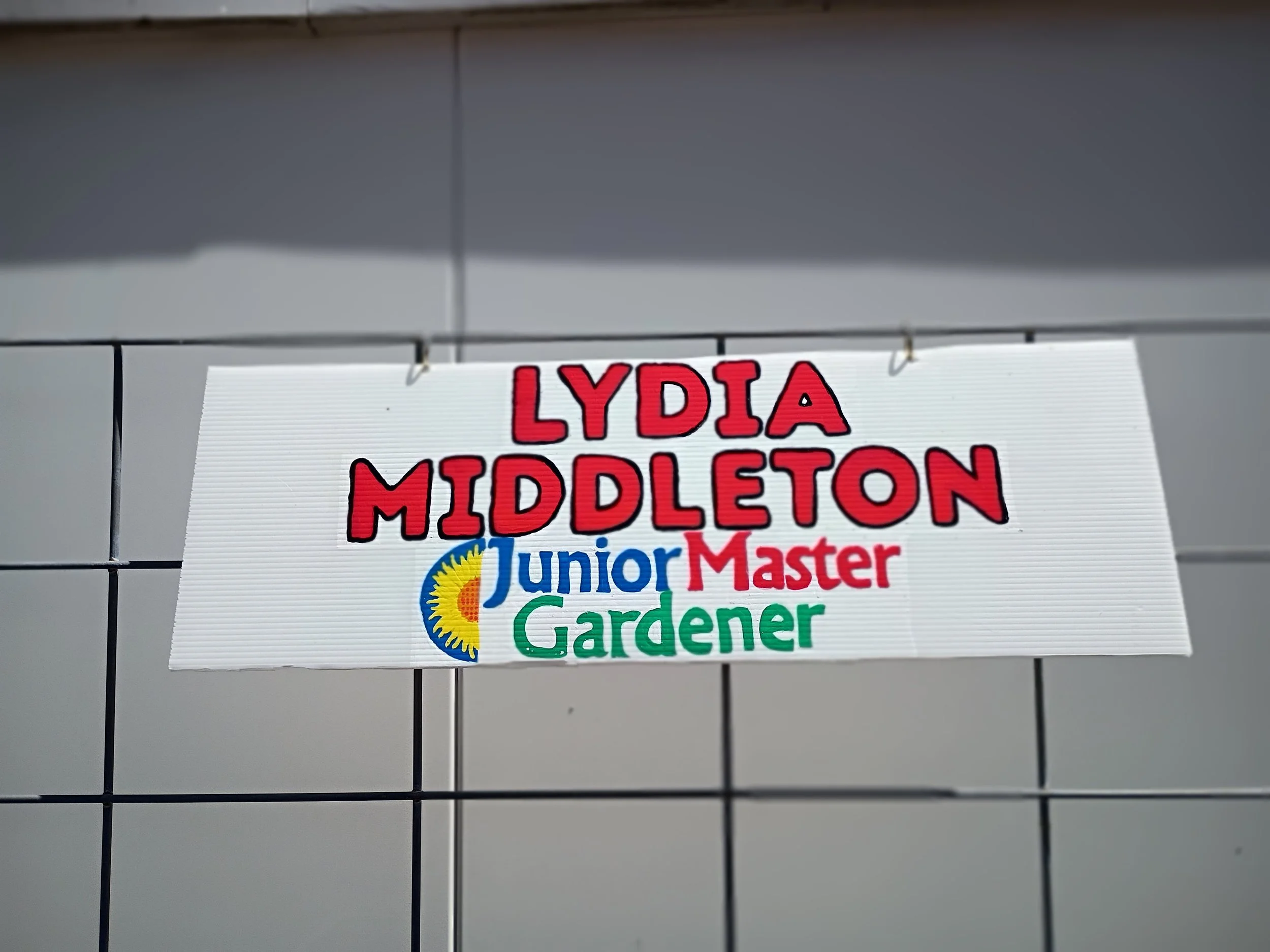
Lydia Middleton Elementary School
Pete Vissar, SE Indiana Value Chain Professional
One of the highlights of June was participating in a Madison-area food business tour that brought together community stakeholders, state partners and agricultural leaders. We got to see how producers, educators, community organizers and a farm stop are working together to strengthen local food opportunities for Southeast Indiana residents.
The tour included a visit to Lydia Middleton Elementary School, where third grade students participate in the Junior Master Gardener program. The program gives students the opportunity to engage in hands-on agricultural education demonstrating the importance of farming and healthy eating habits.
We also visited with the Madison Area Growers Association to learn about Community Supported Agriculture (CSA) and its role in supporting fresh, locally grown food. These types of collaborative approaches help strengthen regional food systems by giving farmers new opportunities.
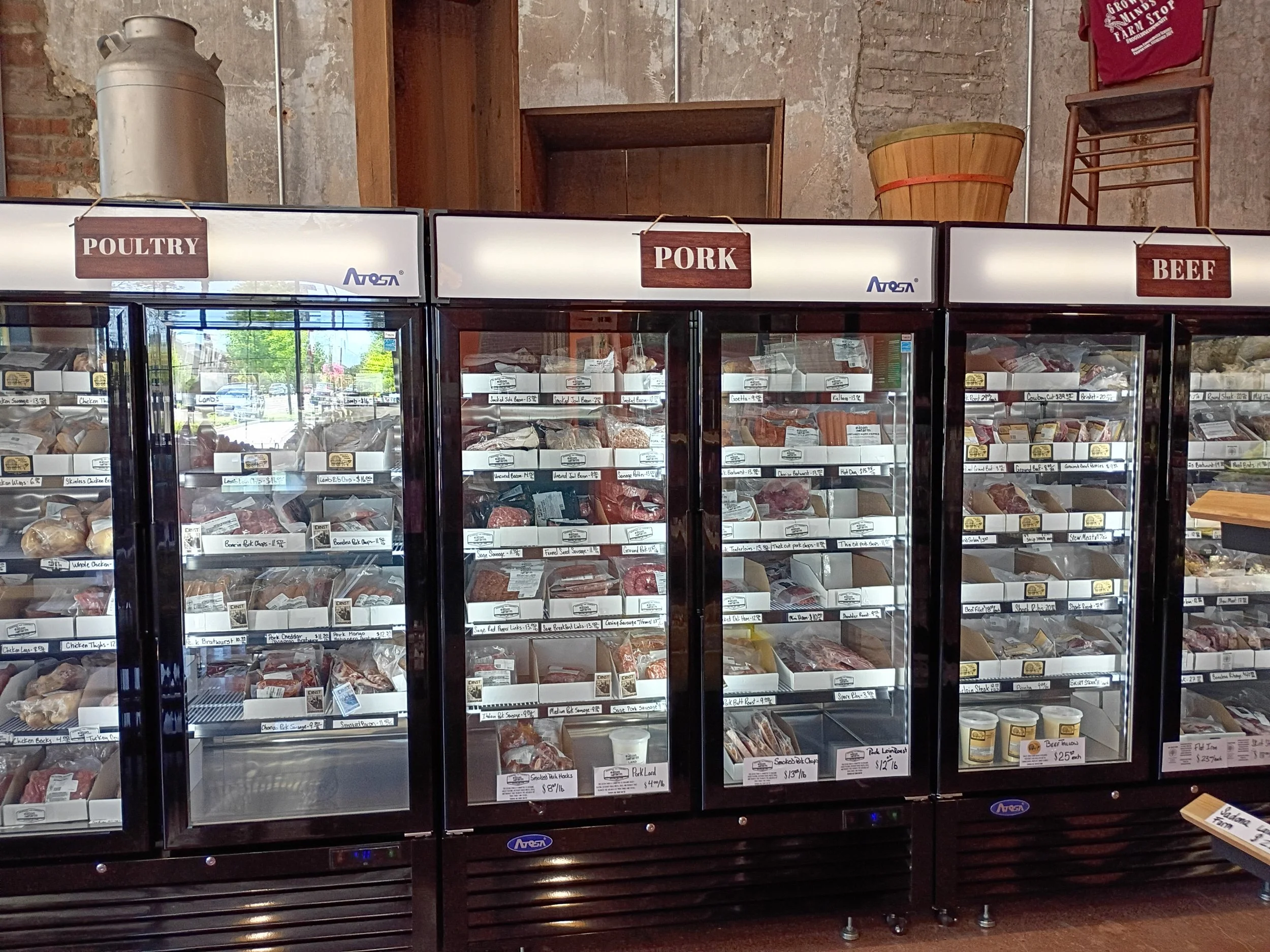
Growing Minds Farm Stop
At Growing Minds Farm Stop, we observed how the high school student-operated market serves as both a local food outlet and a workforce development opportunity for students. The Farm Stop provides students with experience in retail operations, customer service and local food marketing while supporting market access for regional producers.
Additional discussions and a site visit to Summer Solstice Farm focused on infrastructure and opportunities to increase wholesale and institutional sales. As the demand for local food continues to grow, we also need to start investing in distribution and processing facilities that will allow for producers to access larger markets such as schools, hospitals and food service operations.
It was a great day of learning and meeting extraordinary people that are finding innovative ways to strengthen the local food system and expand opportunities for producers.
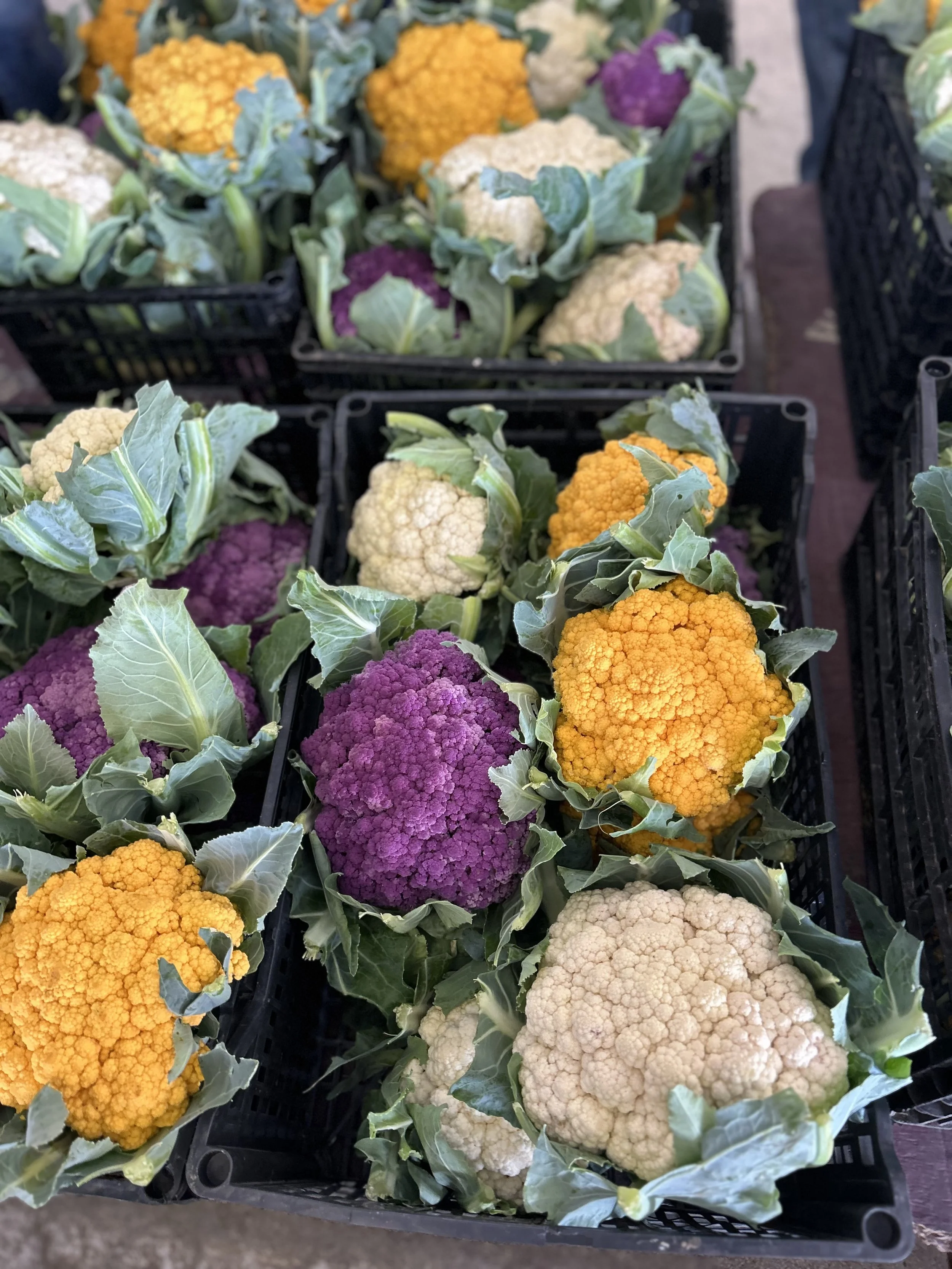
Colorful cauliflower at auction
Becky Landes, NE Indiana Value Chain Professional
Last month, I wrote about one facet of Value Chain work: connecting growers to buyers and budding growers to seasoned growers. This month, I am writing about another part of what I do: learning and sharing about the large quantities of food that flow through our local food systems through produce auctions.
In northeast Indiana, there are four organized produce auctions. I realize there may be other produce auctions operating in this region, but the four I am writing about today have managers, multiple growers and buyers, a regular auction schedule, and public market reports after each auction.
The auctions have some commonalities, but each also has its own nuances. If you are attending a produce auction for the first time and plan to purchase items, it is wise to arrive early to familiarize yourself with the auction. After all, you don't want to purchase produce and then realize that they don't accept credit cards and you don't have cash or a check with you. If you are a seasoned purchaser, you have learned that you should arrive early so that you can inspect what you intend to purchase, see how many items are in each lot, and other pertinent information. If you don't take the time to do this, it can have surprising and costly consequences, such as thinking you have only purchased 10-pound boxes of tomatoes and you actually purchased 12 boxes. The reason for this expensive surprise is that the tomatoes are sold by the 10-pound box, and then the cost is multiplied by the number of boxes in the lot. What you thought was a nice box of tomatoes for $12 dollars becomes a $144.00 purchase and a lot of tomatoes you are not sure what to do with!
As mentioned earlier, some auctions accept credit cards, while others accept only cash or checks. Some auctions may have produce that is not locally grown, especially early in the season, but it is usually marked with the state it came from. You most likely will not find much information about the auction online unless someone has posted it for them, because the auctions are typically run by the Plain Communities. Some auctions offer delivery of the items, and some do not. You will need to check with each individual auction to see whether delivery service is offered. Some auctions also have baked goods for sale in the retail section. The retail section is for small quantities of items and can be purchased at the price marked on the box rather than by bidding. In the early spring, before the produce is ready, they auction off plant starts and flowers. The flowers are beautiful and can be purchased in larger quantities as small individual plants, in planters, or in hanging baskets, ready to decorate your home or business.
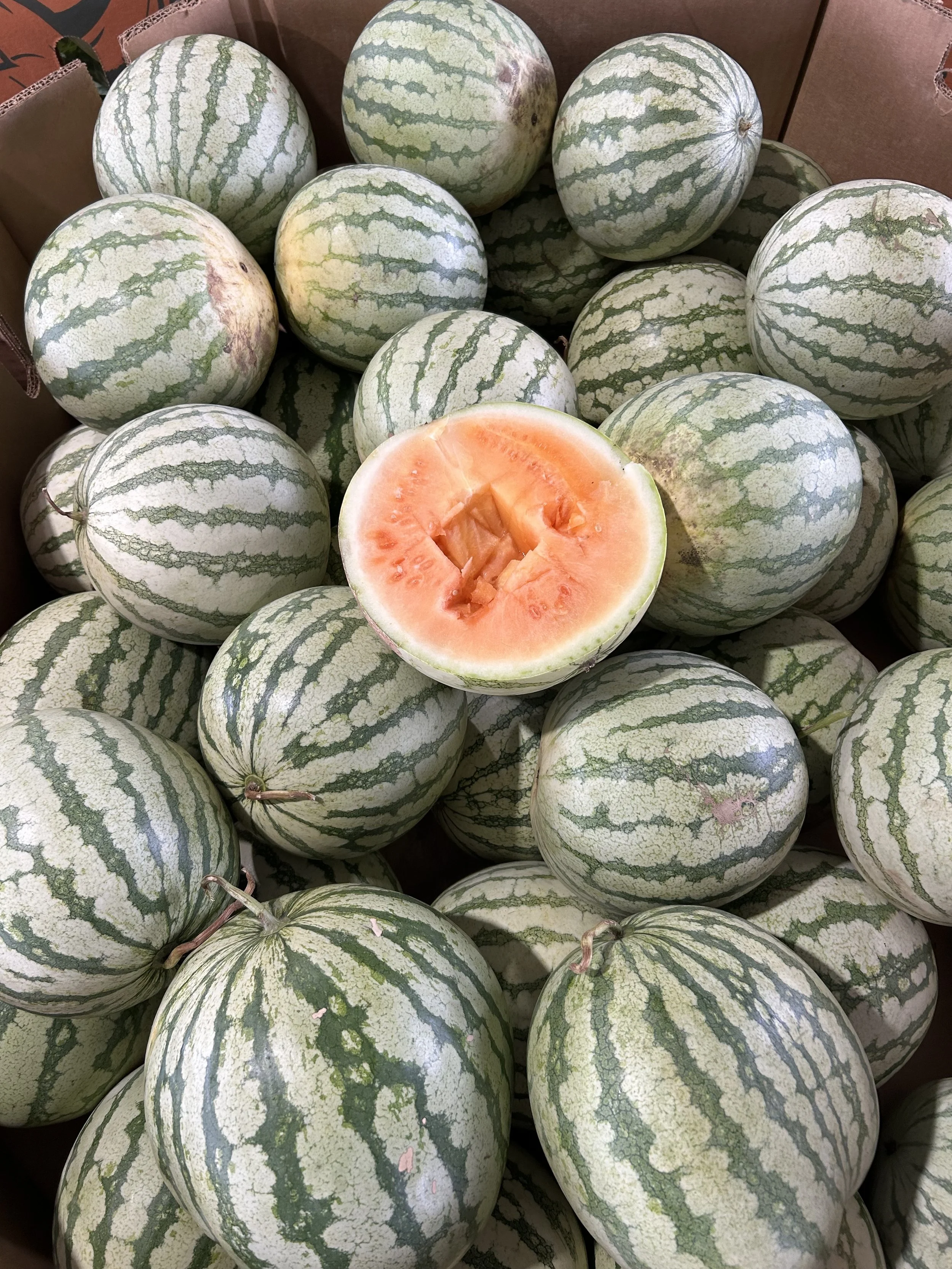
Melon at auction (photo from last season)
You will need a bidder number if you are a purchaser and a grower number if you are a seller. Stop at the auction office to complete the needed paperwork before the auction starts. The auctions are intended for wholesale purchasers, but individuals can purchase items as well. There is usually a surcharge if you are a non-business/institution purchaser. If you are a business or institutional buyer and want to utilize the auction for your produce or flower needs, you can use the auction's order buyer. An order buyer will purchase items on your behalf according to your specifications. Check with each auction to learn how to utilize this service.
One additional note about auctions is the sense of community that I find there. Many of the sellers and growers are regular participants, and they know each other. Oftentimes, there is friendly banter between the two parties with smiles and chuckles. The auctioneers know the regular attendees, and there is some friendly, sometimes lighthearted, conversation woven into their dialog. Usually, there is a row of older people in camp chairs sitting on the sidelines watching the people, bidding, enjoying the camaraderie, and engaging in conversation with each other. There are public restrooms and a concession stand at the auctions. The auctions can feel like a slice of time and place from a bygone era while remaining highly relevant and serving as a means to move large quantities of flowers and produce throughout Indiana and neighboring states.
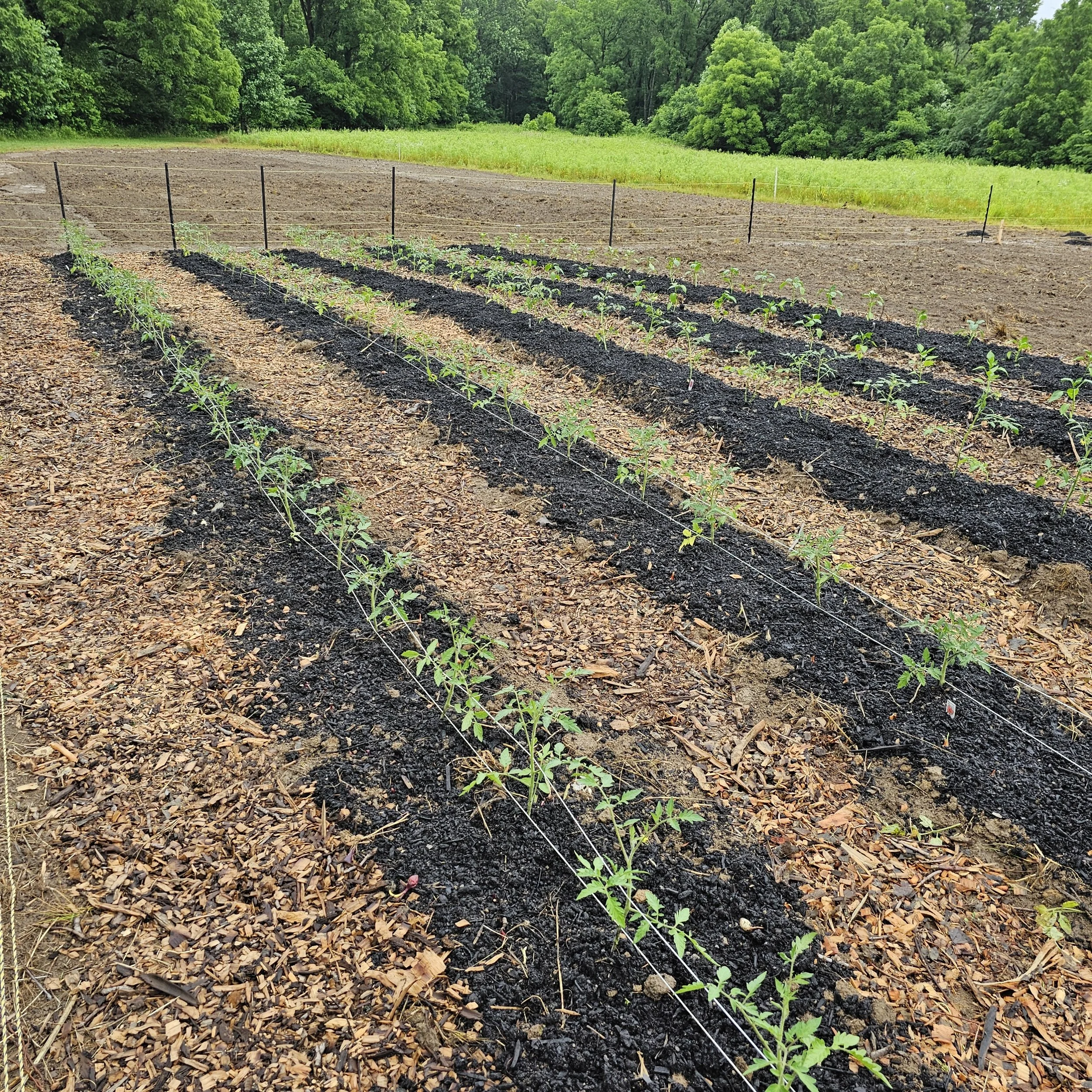
Tomatoes at Airy Knob
Jen Musall, NW Indiana Value Chain Professional
Throughout the month of June I have watched as chefs, buyers, sellers, support actors and so many others in the local food system have chosen to take a journey into local foods in support of their communities.
Some examples of this are a meeting with a community foundation who listened while I explained how they could expand their support for a local food system through local food at schools and supporting local farmers, a university professor who attended a FARMWISE Connection who realized through his connection to local farmers he could help those farmers and the community, and I attended a discussion with a school and a family of alumni who want to explore the idea of growing a fruit in the community to sprout something more.
Also, I watched and participated in discussions where unique solutions are being applied. Such as a training on local foods for K-12 kitchen staff where they learned how to do more scratch cooking with local foods while balancing the impact on the flow of their work day. Robin and I met with two farms; one within a solar array and another expanding their regenerative farming impact. Both looking for ways to make a difference with local foods in their community.
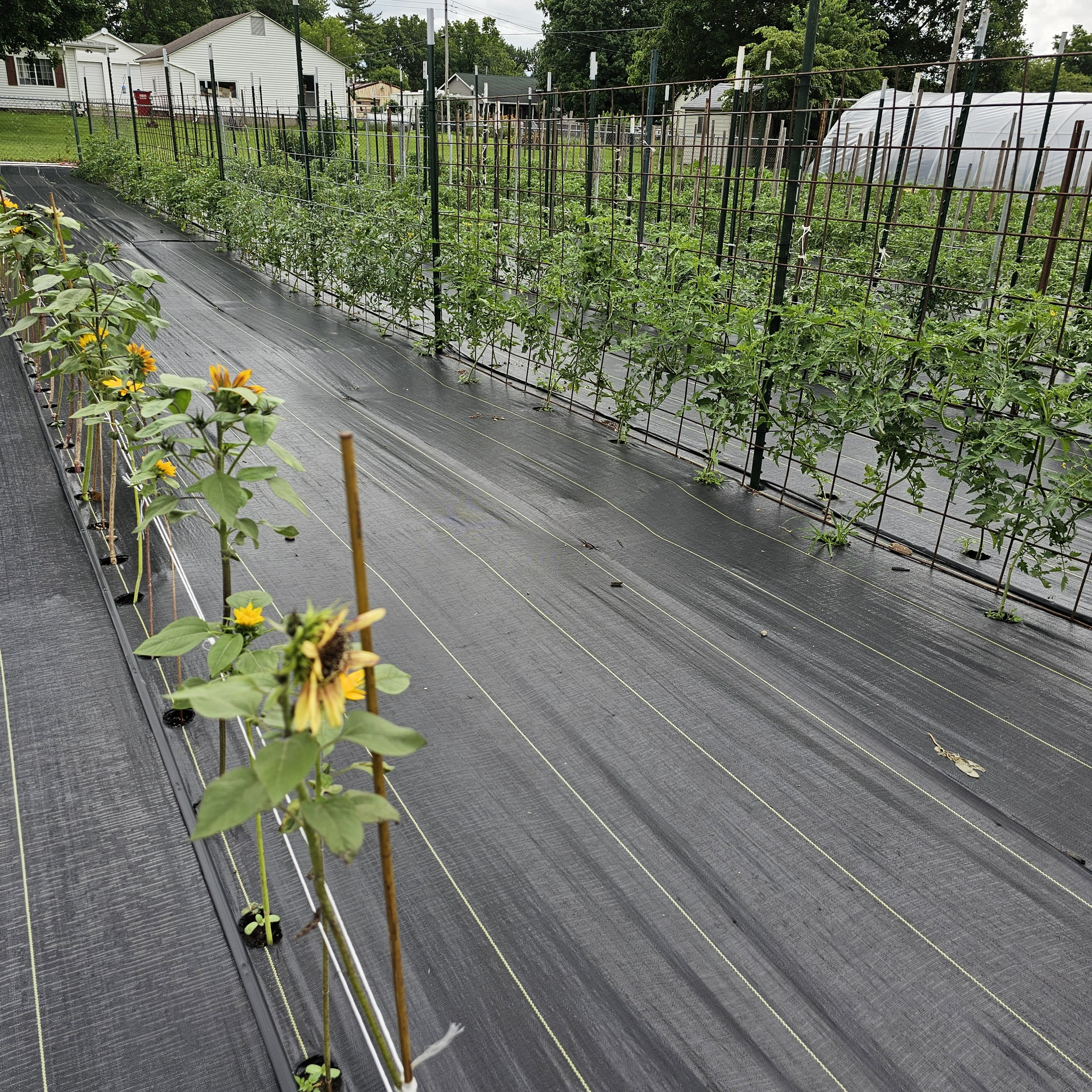
Tarquini Farm
Following up from March’s newsletter, we crossed the finish line atCamp Buffalo with the help ofRegion Roots Local Farm and Food Hub andFischer Farms. Camp meals included a variety of local fruits, vegetables, proteins, and grains.
The local impact to our communities is happening if you watch and listen.
